
The Weight Advantage: How Fiberglass Panels Optimize GVWR for Van Conversion Builders
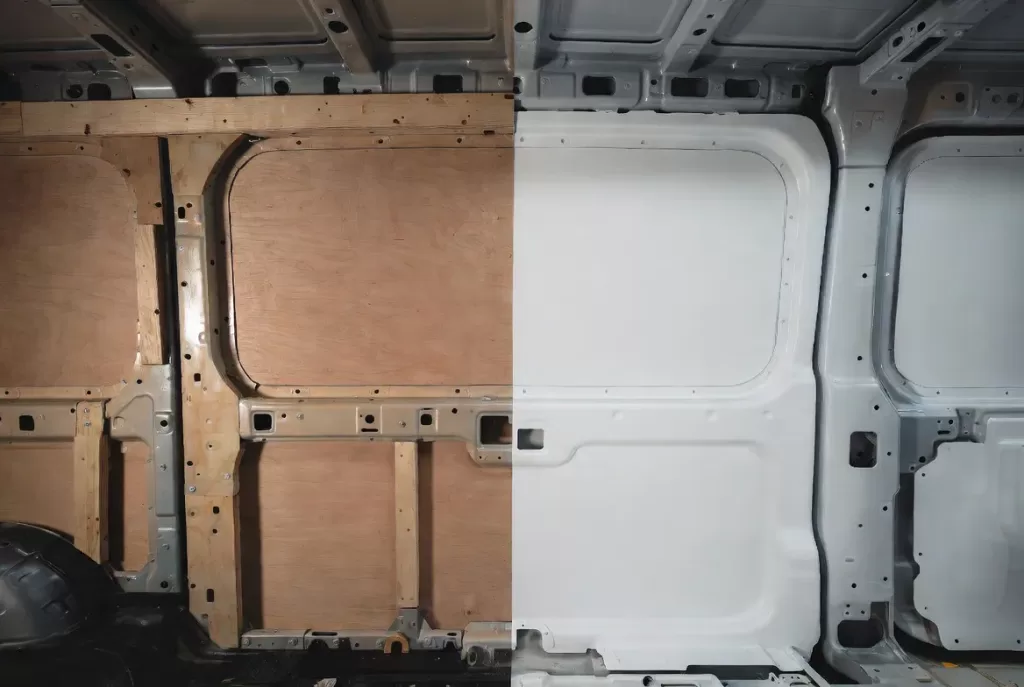
For professional van conversion builders, the biggest challenge is not just craftsmanship. It is the constant battle against the scale. As consumer demand for house-like amenities, including full plumbing, showers, and heavy electrical systems, continues to rise, builders are finding themselves squeezed by Gross Vehicle Weight Rating (GVWR) limits.
In this tight margin environment, traditional materials like plywood and metal are becoming a liability. They consume your precious payload budget and introduce long-term risks that impact your brand reputation.
The Hidden Cost of Traditional Materials
Many builders still rely on plywood and heavy metal structures for interior panels and roof modifications. While familiar, these materials carry significant downsides:
- Weight Penalty: Every pound of wood in the ceiling or wall is a pound that cannot be used for batteries, water, or customer gear.
- Moisture and Thermal Issues: As modern conversions integrate more water features, wood becomes a ticking time bomb. Moisture buildup leads to warping, rot, and potential mold. Additionally, metal structures are a liability due to thermal bridging. These metal ribs sweat when it is cold outside, causing hidden condensation, rust, and mold to form behind your walls.
- Payload Constraints: Once you hit your GVWR, your build is legally constrained. Using heavy materials means you are sacrificing features you could have otherwise offered your customers.
The Engineering Shift: Why Fiberglass is the New Standard
Forward-thinking manufacturers are making the strategic shift to composite fiberglass panels. This is not just an aesthetic upgrade. It is an engineering necessity.
- Optimal Strength-to-Weight Ratio: Fiberglass offers the structural rigidity required for van interiors at a fraction of the weight of wood. This lightweight profile keeps you well within GVWR limits while maintaining robust interior structures.
- Workflow Efficiency: For a professional shop, time is money. Our composite panels are CNC-machined to match specific vehicle chassis geometry. This means you do not have to spend hours scribing and shaving edges to fit the curved walls of a Sprinter, Transit, or ProMaster, significantly reducing the trial and error time associated with cutting traditional materials.
- Durability by Design: Unlike wood, fiberglass is inherently moisture-resistant and acts as a poor thermal conductor. It does not warp or degrade when exposed to the humidity common in high-use vans with showers and sinks, preventing thermal bridging issues and offering a build it once quality that protects your bottom line.
The Laminate Engineering Edge
At Laminate Engineering, we recognize that you are not just buying panels; you are sourcing components for your manufacturing line.
We differentiate ourselves from low-cost, inconsistent offshore competitors by prioritizing:
- US-Based Manufacturing: Our high-quality standards ensure every panel meets your rigorous requirements for strength and finish.
- Precision Fitment: We work closely with your team to ensure that our fiberglass structures, from window pop-outs to complex wall systems, align perfectly with your brand’s aesthetic and manufacturing process.
- Reliability: We provide the consistency that professional builders need to scale their operations without fear of supply chain or quality gaps.
Protect Your Payload and Your Brand
The materials you choose define the longevity of the van and the reputation of your business. By moving to composite fiberglass, you are not just saving weight. You are upgrading the build quality of your product and creating more room for the premium features your customers demand.
Ready to optimize your production and maximize your payload?
Partner with Laminate Engineering to source high-precision composite panels tailored to your build specifications. Contact our engineering team today to discuss your next production run.
