
Introduction
Carbon fiber is the material of choice for cutting-edge products across industries: aerospace, automotive, medical, sports equipment, and more. For startups, it can be tempting to jump on the carbon fiber bandwagon due to its strength, lightness, and sleek aesthetics. But while carbon fiber has its advantages, it’s not always the right fit for every project. In this guide, we’ll break down when carbon fiber is a smart move for your startup’s product—and when you might want to look at other options.
What Makes Carbon Fiber So Appealing?
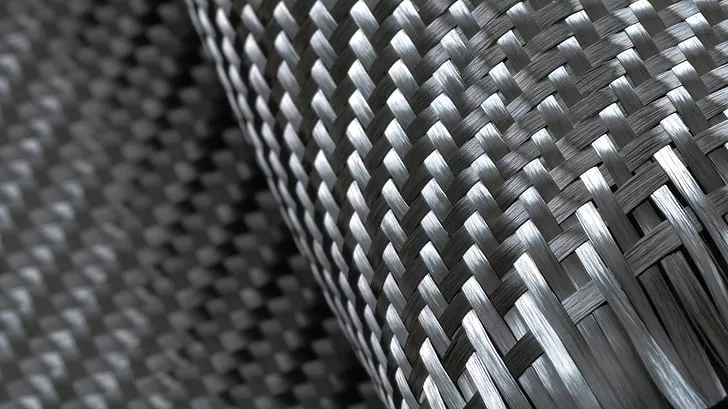
Carbon fiber composites are made from thin strands of carbon woven into fabric and infused with resin. The result? A material that’s extremely lightweight, yet incredibly strong and stiff.
Here are some of the key benefits:
- High strength-to-weight ratio: Perfect for parts that need to be strong and light
- Stiffness: Maintains structural shape under load
- Durability: Long service life and strong fatigue resistance
- Corrosion resistance: Great for harsh or marine environments
- Thermal stability: Low thermal expansion helps maintain dimensional accuracy
- RF transparency: Ideal for enclosures or components that need RF signal transparency
- Visual appeal: Distinctive look adds premium feel to consumer products
If your startup is developing something that requires these features, carbon fiber can give your product an edge in both function and perception.
When Carbon Fiber Is the Right Choice
There are a few situations where carbon fiber is not just a good option, but the best one:
- Weight is critical: Anything that moves, such as drones, bikes, mobility aids, or aerospace components
- Strength and rigidity are required: Structural brackets, load-bearing enclosures, etc.
- Low-volume production: Carbon fiber shines in short production runs where metal tooling might be too expensive
- Visual appeal matters: Premium consumer products like audio gear, sports accessories, or interior vehicle parts
- Corrosive or temperature-sensitive environments: Industrial or medical applications, including MRI compatibility
- Communication equipment: Carbon fiber is often used in radomes and backup structures due to its transparency to radio frequencies
If your part falls into one or more of these categories, it’s worth looking into Carbon Fiber Part Fabrication in more detail.
When Carbon Fiber Might Not Be the Right Fit
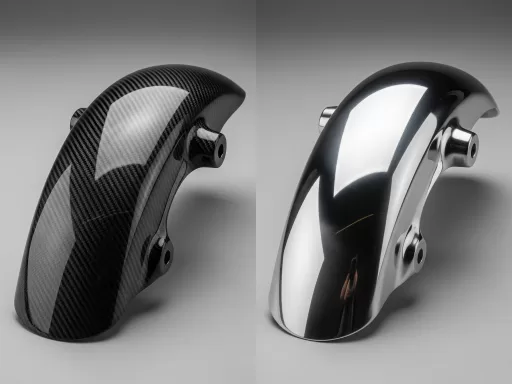
Despite its advantages, carbon fiber isn’t a universal solution. Here are scenarios where it might be overkill:
- Cost is more important than performance: Carbon fiber is typically more expensive than plastics, fiberglass, or metal
- High-volume production: The tooling cost and cycle time may not scale well for tens of thousands of parts
- Extreme wear or impact environments: Some applications may benefit more from high-impact plastics or metals
- Designs that aren’t optimized for composites: If your design requires sharp corners, inserts, or thick sections, it may not make sense for carbon fiber fabrication
Other Materials to Consider
Depending on your project goals, one of these materials may be a better match:
- Fiberglass: More affordable, good for electrical insulation and corrosion resistance
- Thermoplastics: Ideal for injection molding and mass production
- Aluminum or steel: Excellent for high-impact, load-bearing components
- Hybrid composites: Combine carbon and glass fibers for balanced performance
Making the Right Decision for Your Startup Before choosing carbon fiber, ask yourself:
- What kind of performance does my part need?
- Will the part be visible to customers?
- What kind of environment will it operate in?
- What’s my production volume and budget?
- Do I have in-house expertise for composite design?
If you’re still unsure, we can help. At Laminate Engineering, we specialize in helping startups move from idea to prototype and production. Our team has decades of experience with composite prototyping, small-batch runs, and design for manufacturability.
Conclusion
Carbon fiber is a game-changer in the right context, but choosing the right material is all about aligning your product goals with the right process and performance. For startups, every dollar and decision counts. If you’re thinking about using carbon fiber in your next product, reach out to Laminate Engineering for an honest conversation about whether it makes sense—and how to make it work.
Want to discuss your idea? Contact us today or request a quote to get started.
